From Print Job to Production Flow: Grenzebach Demonstrates Automated and Seamlessly Connected Post-Processing at Formnext
- At Formnext, Grenzebach Additive Solutions demonstrates how individual post-processing steps can be automated and seamlessly connected to create an integrated production flow.
- Manufacturer-independent integration enables existing and new equipment, as well as partner solutions, to be incorporated
- Formnext 2026, Hall 12.0, Booth D61
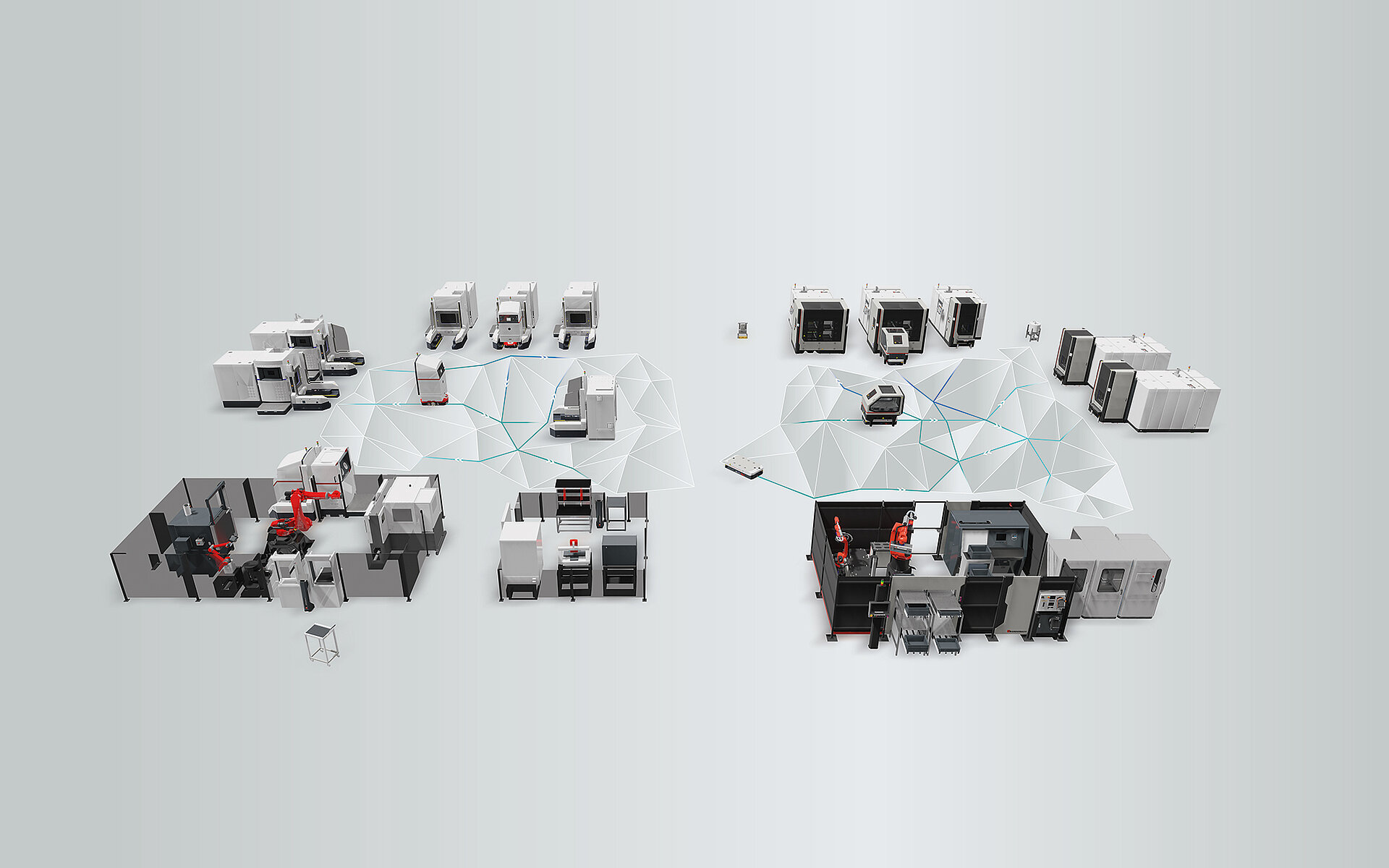
HAMLAR, FRANKFURT/Germany. Grenzebach Additive Solutions is expanding its offering for additive manufacturing. Building on its individual automation solutions, the company now also provides manufacturer-independent end-to-end solutions for the entire post-processing environment, taking overall responsibility for the project. At Formnext 2026, Grenzebach Additive Solutions will demonstrate how this approach works in industrial practice. The focus is on intelligently connecting and automating post-processing steps to enable a seamless production flow. In additive series production, productivity is not determined by the speed of the 3D printer alone. Printing, cooling, depowdering, transport, and other post-processing steps have different process times. Grenzebach automates and connects these individual steps mechanically, electrically, and digitally to create an integrated production flow.
Intelligently Connecting Automated Post-Processing for a Seamless Production Flow
A key challenge in industrializing additive manufacturing is coordinating process steps with different cycle times. To achieve this, Grenzebach Additive Solutions combines automated loading and unloading with transport, buffer, and post-processing solutions.
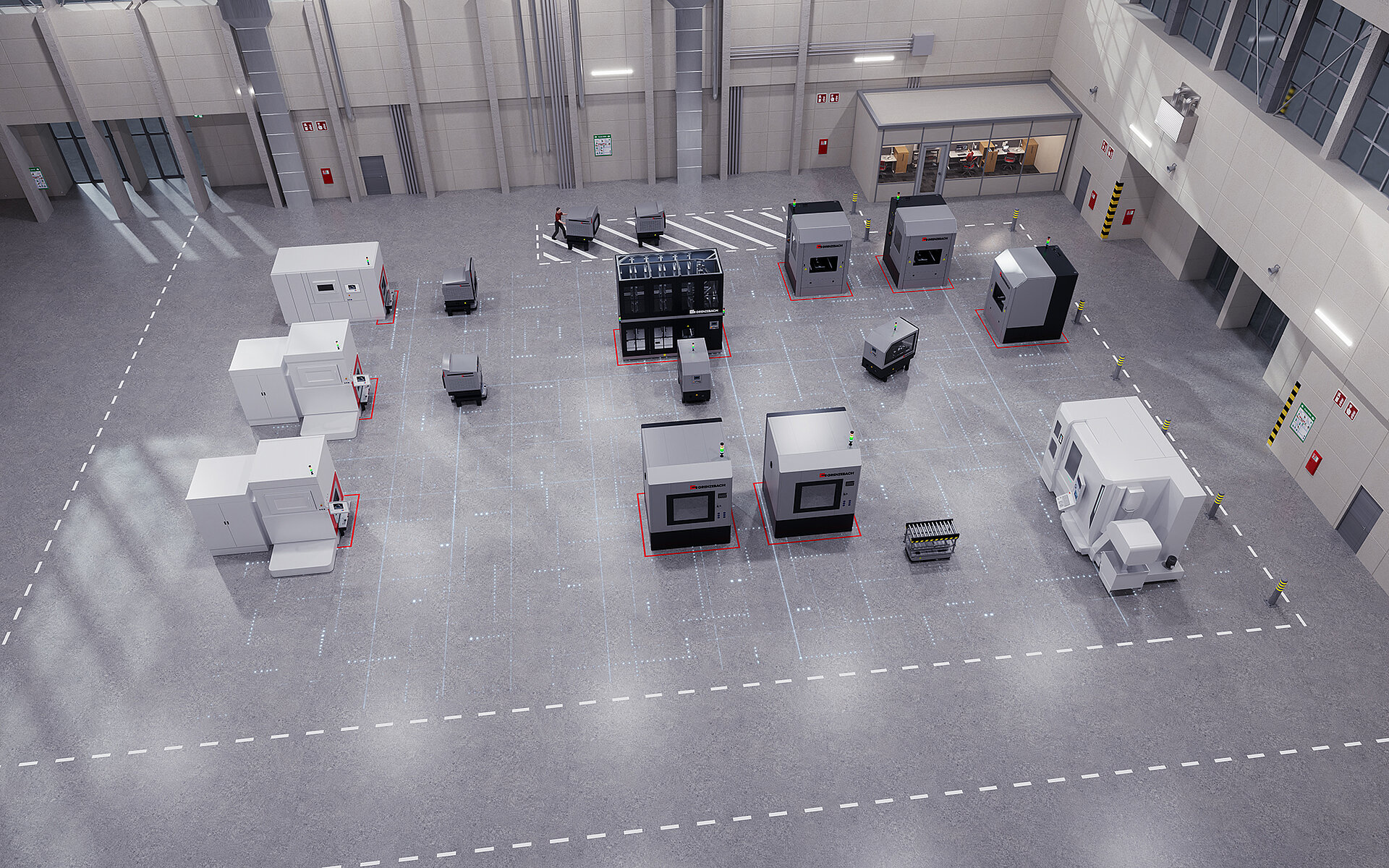
Buffers play an important role in this process. For example, a completed build job can be automatically removed from the printer and placed outside the system, either to await the next process step or to cool down. This allows the printer to become available for the next build job sooner. Downstream processes such as depowdering can also take place in parallel with the next printing process.
Autonomous transport solutions handle the material flow between the individual stations. Depending on the process and component, specific process requirements can also be accommodated. In metal 3D printing, for example, hot components can be transported to the next station in suitable transport containers under an inert gas atmosphere.
“For productive additive series manufacturing, optimizing individual machines alone is not enough. What happens between the machines is what matters. The real challenge is to automate the processes between them and connect them seamlessly. Different cycle times, material flows, and technologies need to be intelligently coordinated so that they operate as one integrated system. This is precisely where our strength lies. We take a holistic view of the entire post-processing environment, automating individual steps and connecting them into a seamless production flow. In doing so, we take responsibility for ensuring that all its elements work together efficiently and reliably.”

Mechanically, Electrically, and Digitally Connected
For an integrated production flow, simply transporting components from one station to the next is not enough. Only the seamless integration of all equipment and systems creates the conditions for efficient industrial series production. Grenzebach combines material flow, automation, and digital process control to create an integrated production environment.
The company combines its own machines and automation solutions for post-processing with existing equipment and solutions from other manufacturers. This allows automated material handling and depowdering, storage and buffer solutions, and advanced post-processing operations, including CNC machining, to be intelligently connected into an integrated production flow.
Grenzebach is not tied to a specific 3D printer manufacturer. Existing equipment can be part of the concept just as easily as newly purchased systems. If a new production environment is being built, Grenzebach can also include the 3D printer and other required equipment in the overall project as needed.
Integration Starts with the Production Process
The right level of automation depends on the individual production environment. Grenzebach therefore starts by analyzing the requirements and existing processes. Based on this analysis, the company develops an individual automation concept. Existing machines are integrated into the optimized production process wherever possible. Simulation of the developed concept can also be part of the engineering process.
“We do not start with a product catalog. We start with the customer’s production process. What equipment is already in place? Where do waiting times and manu-al interfaces occur? What capacities need to be achieved in the future? Based on these questions, we develop a concept that meaningfully connects the individual process steps and can grow with the customer’s requirements.”

The goal is a production flow in which machines and post-processing operations work together as efficiently as possible. Decoupling individual process steps can reduce downtime and manual activities while improving the utilization of existing equipment. At the same time, automated processes support consistent and traceable part quality.
Integration Expertise from Industrial AM Projects
Grenzebach has already demonstrated its ability to connect different systems and process steps into an integrated production environment in pioneering AM projects. In the POLYLINE project, the company contributed its automation expertise to integrate additive polymer manufacturing into industrial production processes. In the nexAMo research project, Grenzebach is working with additional partners to develop solutions for flexible automation and intralogistics in additive metal manufacturing.
Individual process steps have also been implemented at industrial scale. With the Grenzebach Dual Setup Station, build containers are loaded and unloaded fully automatically. A buffer station enables build containers to be exchanged, reducing downtime and allowing depowdering to take place while the next build job is already running. In 2026, Grenzebach received a major order from EOS for 155 Dual Setup Stations.
Grenzebach Additive Solutions is building its end-to-end offering on this experience. Its existing expertise in automation and system integration is being extended to the entire post-processing environment, with Grenzebach serving as the central point of contact and assuming overall project responsibility.